







About Shungite
Shungite Spiritual Meaning: Protection, Grounding and Personal Use
Shungite spiritual meaning is commonly associated with grounding, protection, purification, and personal transformation. People who work with crystals may wear shungite, keep it in a meditation space, place it near the entrance to a home, or use it as a physical reminder of an intention. These meanings belong to modern crystal practice and personal belief; they are not laboratory measurements or guaranteed effects.
That distinction does not make the practice meaningless. A natural object can carry geological, cultural, aesthetic, and personal significance at the same time. Shungite is especially suited to this role because it is an ancient Karelian carbon-rich rock with a deep black appearance, visible mineral variations, and a documented scientific history.
Shungite Spiritual Meaning at a Glance
| Spiritual theme | Common symbolic meaning | How people may use shungite |
|---|---|---|
| Grounding | Stability, presence, and connection with everyday life | Holding a stone during breathing or meditation |
| Protection | A personal boundary against unwanted emotional or energetic influence | Wearing a pendant or placing an object near an entrance |
| Purification | Letting go of mental clutter, old habits, or stagnant feelings | Including shungite in a reflective ritual |
| Transformation | Resilience, change, and a conscious new beginning | Using the stone as a reminder of a chosen intention |
| Root chakra | Security, embodiment, and connection to the physical world | Placing it nearby during chakra-focused meditation |
Why Is Shungite Used in Spiritual Practice?
Shungite entered contemporary crystal and wellness culture through a combination of its appearance, origin, physical characteristics, and stories associated with Karelia. Its black color naturally lends itself to symbolism involving protection, depth, boundaries, and the earth. Its great geological age can represent endurance and continuity, while the transformation of ancient carbon-rich material under geological conditions makes it an intuitive symbol of change.
Unlike transparent crystals, polished shungite usually has a restrained dark surface. Quartz veins, pyrite specks, pores, and changes in texture remain visible in many pieces. For some people, these irregularities strengthen the sense of holding something natural and individual rather than a perfectly uniform manufactured object.
The scientific properties of the rock are a separate subject. Shungite contains a distinctive form of carbon and has been studied for conductivity, sorption, and electromagnetic behavior in defined material systems. These measured characteristics should not be used as automatic proof of spiritual energy, but they help explain why the stone attracts interest beyond its appearance. Our guide to shungite composition and scientific properties examines that evidence in detail.
Grounding and Stability
Grounding is the spiritual meaning most often connected with black stones. In practical terms, a grounding ritual aims to redirect attention from racing thoughts toward the body, breath, and immediate surroundings. Shungite can serve as the tactile center of that exercise: its weight, cool surface, and natural texture provide a simple physical point of focus.
A person might hold a shungite stone while breathing slowly, wear a pendant during a demanding day, or place a small object on a desk as a reminder to pause before reacting. The stone is not a treatment for anxiety or stress. Its role in this context is symbolic and behavioral: it supports a deliberate moment of attention because the user has assigned that purpose to it.
Protection and Personal Boundaries
In spiritual practice, protection usually refers to an intention to maintain clear personal boundaries and avoid becoming overwhelmed by a place, interaction, or emotional atmosphere. Shungite is often selected for this purpose because black stones are traditionally associated with containment, seriousness, and stability.
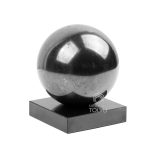
Some practitioners wear shungite jewelry as a personal protective symbol. Others keep a pyramid, sphere, cube, or raw stone near the entrance to a room or within a meditation area. Such placement is a matter of belief and ritual design; there is no scientifically established distance, direction, or quantity that produces a spiritual shield.
If you prefer wearable symbols, explore our natural shungite pendants. Designs carrying recognizable symbols are available in the collection of engraved shungite pendants.
Purification and Transformation
Purification in a spiritual context is not the same as chemical filtration. It commonly means reviewing what no longer feels useful: a recurring thought, an old routine, emotional tension, or an attachment to a past situation. A stone can mark the beginning and end of that reflection.
Shungite’s natural history gives this symbolism a clear foundation. Carbon-rich material was preserved and changed during geological processes lasting immense periods of time. For a spiritual practitioner, that history may represent endurance, adaptation, and transformation without requiring a claim that the stone directly changes a person’s energy field.
Shungite and the Root Chakra
Modern chakra practice often associates shungite with the root chakra, or Muladhara, because of its black color and grounding symbolism. The root chakra is commonly linked with safety, physical presence, home, stability, and basic needs.
During a chakra meditation, a practitioner may place a shungite object nearby, hold it in the hand, or position it at a comfortable distance near the lower body. There is no required shape. A smooth palm stone may be convenient for holding, while a pyramid or sphere can act as a visual center for a meditation space.
Shungite and Zodiac Signs
Shungite does not have one universally accepted traditional zodiac correspondence. Its use in Western crystal astrology is relatively modern, and different authors connect it with different signs, planets, or elements. Claims that it belongs exclusively to one zodiac sign should therefore be treated as interpretations rather than established tradition.
A more useful approach is to choose shungite according to the quality a person wants to emphasize. Someone seeking greater structure may use it as a grounding symbol; someone entering a period of change may connect it with transformation; another person may choose it simply because Karelian stone has personal, cultural, or aesthetic meaning. In this approach, shungite can be used by any zodiac sign.
How to Use Shungite in Meditation
- Choose one intention. Use a clear phrase such as “I return my attention to the present” or “I protect my time and boundaries.”
- Select a comfortable object. Hold a smooth stone or pendant, or place a larger shape where it can be seen.
- Notice physical details. Observe the stone’s weight, temperature, texture, veins, and reflections without trying to force a special sensation.
- Breathe and return. When attention wanders, use the stone as a cue to return to the breath and intention.
- Close the practice. Decide on one practical action that reflects the intention outside meditation.
This method does not require belief in a particular invisible mechanism. It allows the stone to function as a meaningful object, a focus for attention, and a reminder of a decision.
Shungite in Crystal Grids and with Other Stones
In contemporary crystal practice, shungite is often placed at the edge of a crystal grid to symbolize grounding or boundaries. It may be combined with clear quartz for clarity, smoky quartz for grounding, or stones selected for a personal intention. These pairings come from modern symbolic systems; they do not demonstrate that one mineral physically amplifies another.
Geometry can also carry meaning. A circle may represent continuity, a pyramid direction and concentration, a cube stability, and a heart personal connection. An engraved symbol can add another layer of meaning chosen by the owner. No shape is inherently more spiritually powerful for every person.
How to Cleanse Shungite Spiritually
Spiritual cleansing is a ritual reset rather than a laboratory requirement. Common gentle methods include wiping the object with a soft dry cloth, placing it in a chosen meditation space, using sound, or briefly holding it while restating an intention.
Avoid aggressive cleaning, prolonged soaking, salt, acids, and abrasive products. Natural shungite can contain mineral veins and fragile edges, while jewelry may include cords, metal fittings, or adhesive components that require separate care.
Choosing a Shungite Object for Personal Practice
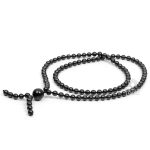
- Pendant or bracelet: a wearable reminder of an intention
- Palm stone or rod: a tactile focus for meditation
- Pyramid or sphere: a visual center for a room, shelf, or altar
- Raw stone: a direct connection with the unpolished material and its geological texture
- Engraved piece: combines the symbolism of shungite with a chosen geometric, spiritual, or cultural motif
The most appropriate object is the one whose form, size, texture, and symbolism fit the intended practice. Authentic origin also matters. Shungite Tolvu makes natural stone products supported by information about the material and its laboratory analysis. Learn how we document the origin and authenticity of our Karelian shungite.
Spiritual Meaning and Scientific Evidence
Two descriptions of shungite can coexist when they are labeled honestly. Science can examine its composition, carbon structure, conductivity, sorption, and behavior in engineered materials. Spiritual practice can give the stone personal meanings connected with protection, grounding, transformation, or meditation.
Scientific research does not currently establish chakras, psychic protection, amplified intuition, or a measurable spiritual energy emitted by shungite. These ideas should be understood as beliefs, metaphors, and personal experiences—not medical treatment or guaranteed outcomes. For an evidence-focused overview, read what science actually shows about shungite benefits.
Frequently Asked Questions
What does shungite symbolize?
In modern crystal practice, shungite commonly symbolizes grounding, protection, purification, resilience, and transformation.
Which chakra is shungite associated with?
It is most often associated with the root chakra because of its dark color and grounding symbolism. This is a contemporary spiritual correspondence, not a measured physical property.
Which zodiac sign should wear shungite?
There is no universally accepted zodiac assignment for shungite. Any sign may use it according to personal intention, symbolism, or aesthetic preference.
Where should shungite be placed in a home?
For symbolic use, people commonly choose an entrance, desk, meditation area, bedside table, or another place where the object will serve as a visible reminder. There is no scientifically established spiritual placement rule.
Can shungite replace medical or psychological care?
No. A spiritual object may be meaningful within a personal practice, but it should not replace appropriate medical or psychological assessment and care.
Explore Natural Shungite
Shungite does not need exaggerated promises to be meaningful. It is an ancient natural material with a distinctive appearance, an unusual scientific history, and enough symbolic depth to support many forms of personal practice. Explore the complete Shungite Tolvu collection to choose a natural Karelian shungite object that fits your intention.